By Dr. Michael Skarie, DVM | Hess Ridge Animal Hospital
Water is one of the most important parts of your pet’s daily health, but it is also one of the easiest things to overlook.
Yet proper hydration plays an important role in nearly every major function of the body.
When a dog or cat does not take in enough water, the effects can range from mild dehydration to more serious health complications.
The challenge is that there is no single amount of water that every pet should drink.
At Hess Ridge Animal Hospital, we believe preventive care includes paying attention to everyday habits that can influence long-term wellness.
Why Water Is Essential for Your Pet’s Overall Health
Water does much more than satisfy thirst.
One of its most important roles is helping regulate body temperature.
Hydration also supports circulation.
The kidneys also depend on adequate fluid intake.
Water also helps with digestion.
These functions are connected.
That is why changes in water consumption should not automatically be dismissed as harmless, particularly when they occur alongside changes in appetite, urination, energy, or behavior.
How Much Water Should a Dog or Cat Drink Each Day?
One of the most common questions pet owners ask is how much water their dog or cat should drink.
A commonly used general guideline is approximately one ounce of water per pound of body weight per day.
For example, a 20-pound dog may need a different amount of water depending on how active the dog is, what food it eats, and the temperature of its environment.
Cats can be more difficult to assess because their water intake is influenced heavily by their diet.
It is also important to remember that water intake can change throughout the day.
What matters is the overall pattern.
If your pet consistently drinks much more or much less than usual, it is worth discussing the change with your veterinarian.
Why Dogs and Cats Have Different Hydration Needs
Dogs and cats both need fresh water every day, but their natural behaviors and eating habits can influence how they get it.
How dogs maintain hydration
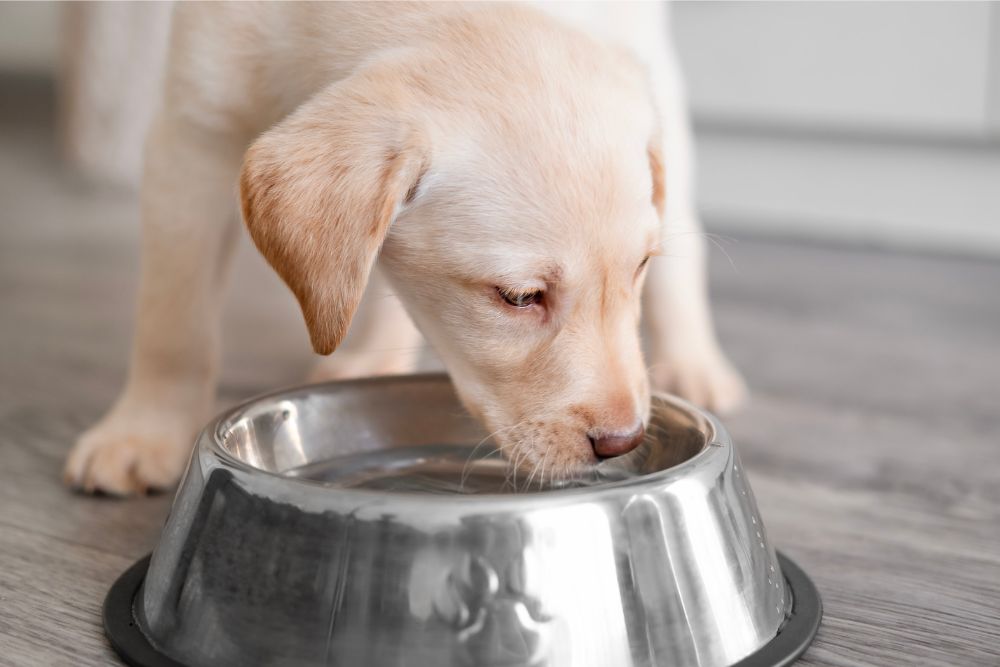
Dogs generally drink water throughout the day, although their intake can vary with activity and environmental conditions.
A dog that spends time running, hiking, playing, or walking outside may need additional water to replace fluid losses.
Some dogs drink more quickly than others.
Instead of assuming that every dog should drink the same amount, pay attention to what is normal for yours.
How cats maintain hydration
Cats have different natural drinking patterns, and some are less interested in drinking from a traditional water bowl.
Because cats evolved from ancestors that obtained much of their moisture from prey, they can receive a significant portion of their daily water through food.
A cat eating wet food may appear to drink very little because much of its water intake comes from meals. A cat eating dry food generally depends more heavily on drinking water separately.
Cats may also have preferences about where and how water is offered.
If your cat rarely visits the water bowl, it does not automatically mean the cat is dehydrated.
Wet Food vs. Dry Food: How Diet Affects Water Intake
Food is an important part of the hydration picture, particularly for cats.
Wet pet food contains considerably more moisture than dry kibble.
Dry food contains much less moisture, so pets eating primarily kibble need to obtain more of their water separately.
Neither feeding approach automatically determines whether a pet is properly hydrated.
For cats, incorporating wet food into an appropriate feeding plan may help increase total moisture intake.
When considering a diet change, it is important to evaluate the pet’s complete nutritional needs.
A veterinarian can help determine whether changes in food type, feeding portions, or other aspects of the diet are appropriate.
Signs Your Dog or Cat May Not Be Getting Enough Water
Dehydration occurs when the body loses more fluid than it takes in.
Some signs may be subtle at first, while others indicate that a pet needs prompt medical attention.
Changes in energy and behavior
A pet that is not adequately hydrated may become less active or appear unusually tired.
These changes are not specific to dehydration. Many health conditions can affect energy levels.
Dry or tacky gums
Healthy gums are generally moist. Gums that feel unusually dry or sticky may be a sign of dehydration.
However, checking gum moisture alone cannot determine whether a pet is dehydrated. Other factors can influence how the mouth feels, and a veterinary examination may be necessary to assess hydration accurately.
Reduced appetite
Some pets eat less when they are not feeling well or are experiencing dehydration.
If your dog or cat suddenly loses interest in food, consider whether drinking habits have changed as well. Reduced appetite can occur with many medical conditions, so it should not be assumed to be a simple hydration issue.
Cats that stop eating require particular attention. If your cat refuses food or has a significant reduction in appetite, contact your veterinarian rather than waiting several days to see whether the problem resolves.
Changes in urination
Urination is closely connected to hydration and kidney function.
A pet that is dehydrated may produce less urine, while certain medical conditions can cause increased urine production and increased thirst.
Pay attention to changes in how often your pet urinates, the amount produced, and whether your pet seems uncomfortable.
For cats, repeated trips to the litter box, straining, or producing little or no urine can indicate a serious urinary problem. Inability to urinate is an emergency, especially in male cats.
Do not attempt to treat these symptoms simply by encouraging your cat to drink more water.
Other possible warning signs
Depending on the severity and cause, dehydration may also be associated with:
- Weakness or unusual lethargy
- Sunken-looking eyes
- Dry mouth
- Reduced skin elasticity
- Vomiting or diarrhea
- Collapse in severe cases
No single home observation can reliably measure how dehydrated a pet is. If you suspect dehydration, contact your veterinarian for guidance. Severe weakness, collapse, or other significant symptoms require immediate veterinary attention.
Why Is My Pet Drinking So Much Water?
Not drinking enough is not the only hydration concern. A noticeable increase in water consumption can also be important.
If your dog or cat suddenly starts drinking more than usual, it may be responding to warmer weather, increased activity, a diet change, or another temporary factor.
However, persistent excessive thirst can sometimes be associated with underlying medical conditions.
In dogs, increased thirst and urination may occur with conditions such as diabetes mellitus, kidney disease, or Cushing’s disease.
In cats, increased drinking and urination can be associated with chronic kidney disease, diabetes mellitus, and hyperthyroidism, among other conditions.
These conditions cannot be diagnosed based on water intake alone. They require a veterinary evaluation and may involve bloodwork, urine testing, or additional diagnostic procedures.
One important detail is whether increased thirst occurs alongside increased urination. If your pet is drinking more and producing larger amounts of urine, make a note of the change and share it with your veterinarian.
Do not restrict water to reduce accidents or frequent trips outside. If a medical condition is causing increased thirst, limiting access to water can make the situation worse.
Factors That Can Change Your Pet’s Daily Water Needs
Hydration needs are not fixed. Several everyday factors can influence how much water your pet requires.
Weather and temperature
Pets may drink more during warmer months, particularly when they spend time outdoors.
Dogs that exercise in hot weather may lose more moisture through panting. Cats living in warm indoor environments may also change their drinking patterns.
Always provide access to fresh water, especially during periods of heat. Avoid leaving pets in hot vehicles or other environments where they cannot regulate their temperature safely.
Exercise and physical activity
Running, playing, walking, and other physical activities can increase a pet’s need for water.
After exercise, offer fresh water and allow your pet to drink at a comfortable pace. Avoid forcing large amounts of water at once.
For longer outings, bring water specifically for your dog rather than assuming that a nearby stream, pond, or other outdoor water source is safe.
Natural water sources can contain harmful microorganisms, chemicals, or other contaminants.
Age and life stage
Puppies and kittens have different needs from adult pets. Their bodies are developing, and they may require closer monitoring of food and water intake.
Older pets may also need additional attention because age-related health conditions can affect thirst, urination, and kidney function.
A change in drinking habits in a senior pet should not automatically be considered a normal part of aging. It may be worth investigating, particularly when accompanied by weight changes, appetite changes, or reduced energy.
Diet and medication
As mentioned earlier, wet and dry foods contribute different amounts of moisture.
Certain medications and health conditions can also influence thirst and urination. If your pet begins drinking more after starting a medication, mention it to your veterinarian. Do not stop or change a prescribed medication without professional guidance.
Practical Ways to Encourage Healthy Water Intake at Home
You do not need complicated products or expensive equipment to support your pet’s hydration. A few consistent habits can make fresh water more accessible.
Keep water bowls clean
Water bowls should be washed regularly to remove saliva, food particles, and other debris. A bowl that looks clean from a distance may still have residue on the surface.
Wash bowls with pet-safe dishwashing practices, rinse thoroughly, and refill with fresh water.
Some pets are sensitive to odors or changes in their water. Keeping the bowl clean can make it more appealing.
Place water in convenient locations
Consider placing water bowls in areas where your pet spends time.
In a home with multiple pets, provide enough water stations so that one animal cannot easily prevent another from accessing water. Cats may prefer drinking locations away from their food or litter box.
For pets with mobility limitations, make sure water is easy to reach without requiring them to climb stairs or travel long distances.
Try different bowl styles
Some cats prefer wide, shallow bowls that do not press against their whiskers. Others may prefer ceramic or stainless-steel bowls rather than plastic.
A pet water fountain may encourage certain animals to drink because of the movement of the water. However, not every pet likes fountains, and they need regular cleaning and maintenance.
If you try a new bowl or fountain, observe whether your pet actually uses it rather than assuming it will automatically improve water intake.
Add moisture through food when appropriate
For pets that eat dry food, adding water to meals may be an option if they accept the texture.
Wet food can also increase dietary moisture, particularly for cats. However, any dietary adjustment should fit the pet’s nutritional needs and medical history.
If your pet is on a prescription diet or has a medical condition, ask your veterinarian before making changes.
Bring water during outdoor activities
For dogs that enjoy hiking, walking, or spending time outside, bring a portable water bowl and a supply of fresh drinking water.
Offer breaks during longer activities, especially when temperatures are high.
Do not rely on standing water or untreated natural water sources. Even water that looks clear may contain organisms or contaminants that can make pets sick.
Monitoring Your Pet’s Water Intake
Many owners do not know how much their pets drink because water bowls are refilled throughout the day. You do not necessarily need to measure every drink, but understanding your pet’s usual habits can make it easier to recognize a meaningful change.
If you are concerned, try measuring how much water you place in the bowl over a 24-hour period and how much remains. Record the amount and repeat the process over several days if your pet is otherwise acting normally.
For households with multiple pets, this can be more difficult because you may not know which animal is drinking from the bowl. Separate water stations or temporary observation may help you identify individual patterns.
Remember to account for water added to food and water spilled from the bowl. Outdoor access can also make measurements less accurate.
A simple record can include:
- How much water is offered each day
- Approximately how much remains
- Whether your pet is drinking more or less than usual
- Changes in urination
- Changes in appetite or energy
- Vomiting, diarrhea, or other symptoms
This information can be useful during a veterinary appointment. It gives your veterinarian a clearer understanding of what has changed and when the change began.
When Changes in Water Intake Require a Veterinary Visit
A temporary change in drinking habits may have a straightforward explanation, but persistent changes should not be ignored.
Schedule a veterinary appointment if your pet consistently drinks much more or less than usual, especially if you also notice increased urination, appetite changes, unexplained weight loss, or changes in behavior.
A veterinarian may recommend a physical examination, bloodwork, urinalysis, or other testing depending on your pet’s symptoms and medical history.
If dehydration is suspected, professional assessment is important because treatment depends on the severity of the fluid loss and its underlying cause. Some pets may need fluid therapy, while others require treatment for an illness that is affecting their ability to maintain normal hydration.
Seek urgent veterinary care if your pet is unable to keep water down, has repeated vomiting or diarrhea, appears severely weak, collapses, or shows signs of significant illness.
For cats, straining to urinate or producing little to no urine should be treated as an emergency. Do not wait to see whether drinking more water resolves the problem.
Making Hydration Part of Your Pet’s Everyday Wellness Plan
Water is easy to take for granted because it is available in most homes. But paying attention to how much your pet drinks can provide useful information about their overall health.
The right amount depends on the individual animal. A dog’s activity level, a cat’s food type, the temperature of the environment, and a pet’s medical history can all influence daily water needs.
Rather than focusing only on a specific number, learn what is normal for your pet. Keep water clean and accessible, make reasonable adjustments when activity or weather changes, and take persistent changes in drinking or urination seriously.
At Hess Ridge Animal Hospital, we believe preventive care is about understanding the small details that contribute to your pet’s well-being. Questions about hydration, diet, appetite, and daily habits are all valuable parts of a wellness conversation.
If your dog or cat has started drinking more or less water than usual, or you are unsure whether their current intake is appropriate, our team can help evaluate the situation and recommend the next steps. Regular veterinary care and attentive observation at home work together to support your pet’s health at every stage of life.